
Search Arkansas Police Blotter
The Arkansas police blotter is the daily log kept by police and sheriff's offices across the state. It lists calls for service, arrests, jail bookings, traffic stops, and other events handled by law enforcement. Anyone can search for this type of record. Most counties post blotter data on their own sites or release it through a records request. This page shows you how to find police blotter entries in Arkansas, who keeps them, and what tools you can use to look up a case, a name, or an incident near you.
Arkansas Police Blotter Overview
Where to Find Arkansas Police Blotter Records
Most Arkansas police blotter entries live at the local level. Arkansas city police keep one blotter log. The Arkansas county sheriff keeps a second blotter log for unincorporated land. Arkansas state troopers keep a third log for highway and state-road arrests and incidents. To find a full Arkansas police blotter for an area, you often need to check all three sources. Some bigger Arkansas cities post a daily arrest list or call log on the agency site. Smaller Arkansas towns may only release the police blotter on request.
The Arkansas State Police is the state's main law enforcement agency. It was set up in 1935. Arkansas troopers work the highways, run Arkansas background checks, and help local Arkansas agencies with big cases. The Arkansas State Police also runs the Crimes Against Children Division and the Arkansas Crime Information Center. You can mail an Arkansas State Police records request to the Identification Bureau at One State Police Plaza Drive, Little Rock, Arkansas 72209.
A good first step for any Arkansas police blotter check is the Arkansas State Police site. Use this link to see the kinds of Arkansas records services ASP gives.
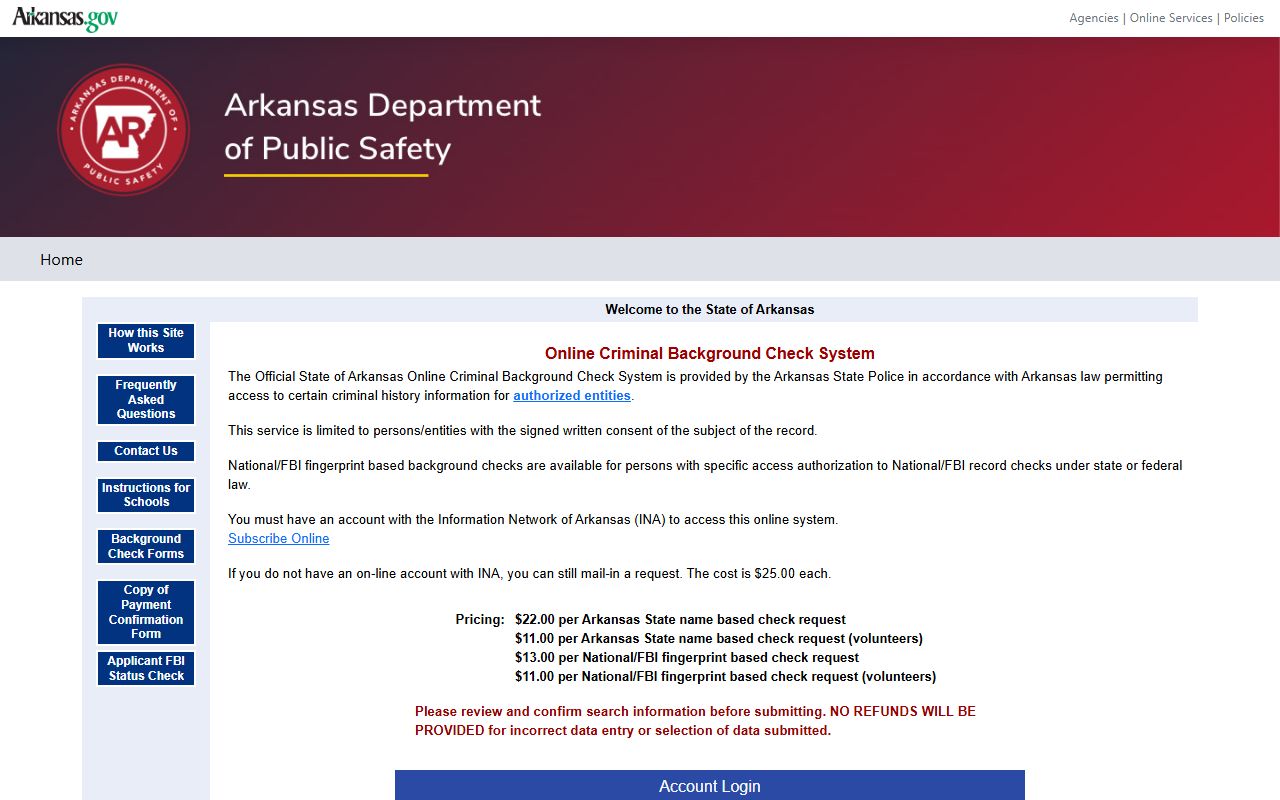
The ASP background check page at cbc.ark.org is where the state handles name-based criminal history checks. The cost is $22 per Arkansas name-based request. Volunteers pay $11. FBI fingerprint-based checks run $13 each, or $11 for volunteers. A mailed request costs $25.
Arkansas Police Blotter Online Access
Online access speeds up most Arkansas police blotter searches. The Arkansas Judiciary CourtConnect tool lets you search Arkansas court case info by case ID, date, case type, or name. It covers civil, criminal, and traffic cases from Arkansas circuit and district courts. You can see dockets, hearing dates, and party names. Some Arkansas courts even post document images through the same site. Arkansas CourtConnect is free to use. It helps tie an Arkansas police blotter entry to a court case once the charges move forward.
Arkansas CourtConnect is run by the Arkansas Administrative Office of the Courts. The Arkansas Supreme Court site has links to all state courts, local rules, and self-help guides. Look here for tips on how to read an Arkansas court docket or file a motion tied to a police blotter case.
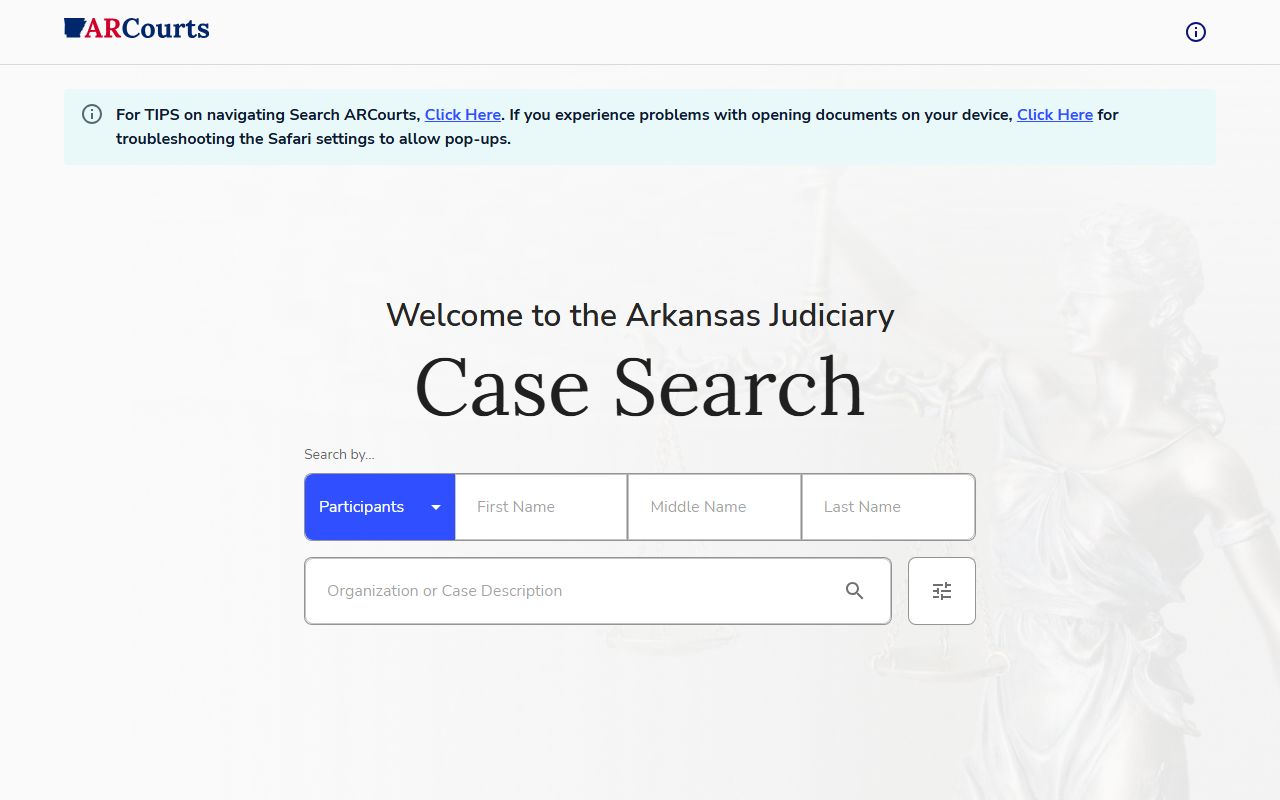
The image above shows the CourtConnect portal. To search, pick the court, enter a last name, and set a date range. The tool also does a "sounds like" search so you can find a record even if you're not sure of the spelling.
To search CourtConnect you need:
- A last name, case number, or filing date
- The county or court you want to pull from
- A web browser set to allow pop-ups for document views
Not every court sends its full docket to CourtConnect. If a case is missing, call the local Circuit Clerk to check if the file is stored only on paper.
What's in an Arkansas Police Blotter
A police blotter in Arkansas is a daily log of events that Arkansas police and Arkansas sheriff's deputies handle. It lists the date, time, and place of each call. It shows the type of event, from a noise complaint to a felony arrest. Most Arkansas police blotters list the officer or unit who took the call. A booking blotter in Arkansas also shows the name of each person booked into jail, the charges, the bond amount, and the time they went in. Many Arkansas sheriffs post a daily jail blotter on the web.
A typical Arkansas police blotter entry may include:
- Date and time of the call or arrest
- Street address or block of the event
- Type of offense or call code
- Name, age, and city of the person arrested
- Charges filed and bond set
- Case or incident number for follow-up
- Name of the responding agency
Jail booking data is often the most detailed part of the Arkansas police blotter. Under Arkansas Code § 25-19-105, public records rules apply to these Arkansas blotter logs, though some details such as Social Security numbers and driver's license numbers get redacted before release. Arkansas homicide case files are kept forever. Arkansas rape case files are kept a minimum of 15 years. Arkansas jail booking records and dispatch logs are kept at least 5 years under A.C.A. § 13-4-404.
Most Arkansas police blotter entries are short. A typical line reads like: "03:42, Disorderly conduct arrest, 400 block of Main St., suspect booked at county jail." Longer incident reports and arrest reports flesh out what the blotter summary only hints at. The blotter is the first layer. The incident report is the second. The court docket is the third. Arkansas sheriffs and city police produce all three.
Police Blotter Records Through ACIC
The Arkansas Crime Information Center is the state's central data hub for police blotter records and law enforcement files. ACIC runs a computer system that is used by more than 250 criminal justice agencies across Arkansas. It ties into the FBI National Crime Information Center and into the systems of the other 49 states. When a local Arkansas agency books a person, the booking data flows up to ACIC, which then feeds NCIC. Arkansas arrest records and Arkansas police incident reports are part of that flow.
ACIC also runs the Arkansas Criminal History system, known as ARCH. ARCH lets a person see and challenge his or her own Arkansas record under A.C.A. § 12-12-1013. You send the request to the Administrator of the ACIC Criminal History Division. Most of the data in ACIC is off limits to the public. Arkansas crime stats are the main item that ACIC publishes on its own.
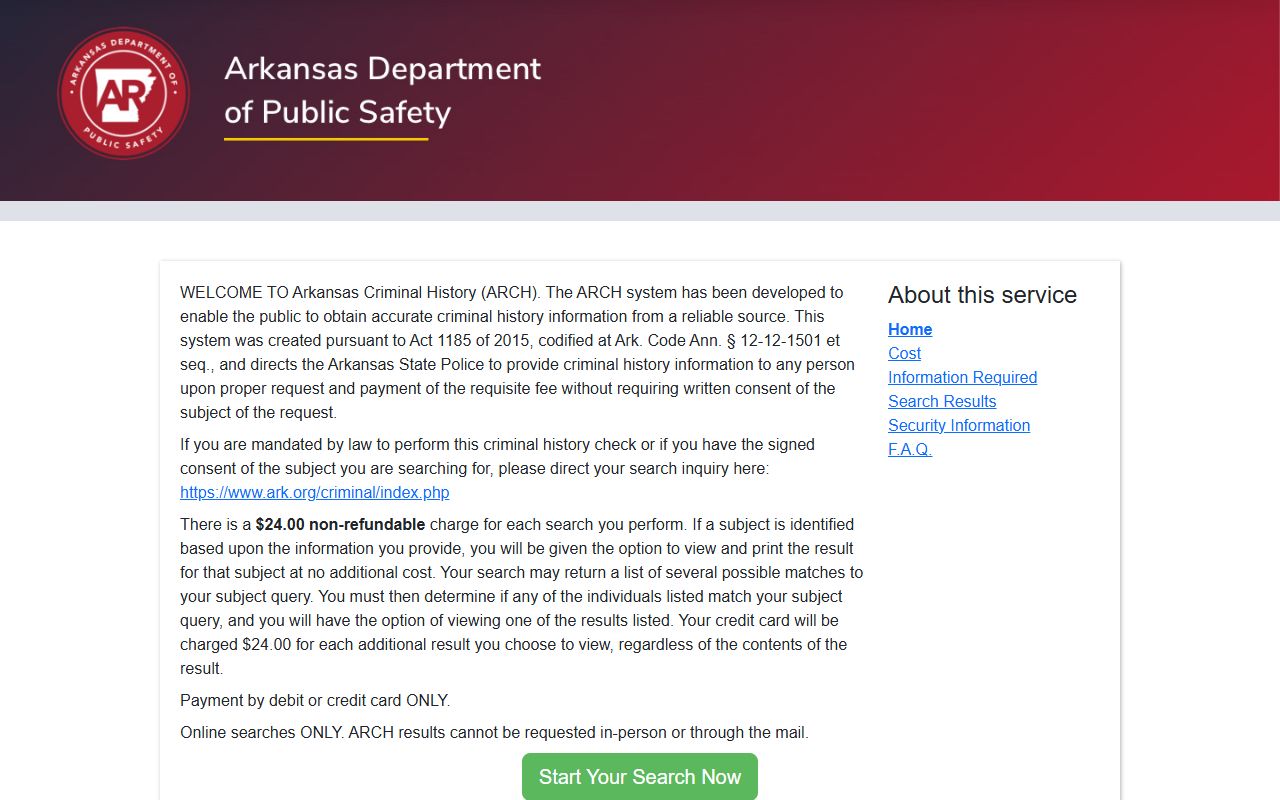
ARCH is where you go to see your own Arkansas criminal history. The site uses INA accounts. You log in, pay a fee, and get a copy of the state's record on you.
ACIC rules are set by a Director and a 14-member board. The board sets policy and picks the Director. Authority for the rules is in A.C.A. §§ 12-12-203(a)(5) and 12-12-203(b). The ACIC system was set up by Act 286 of 1971.
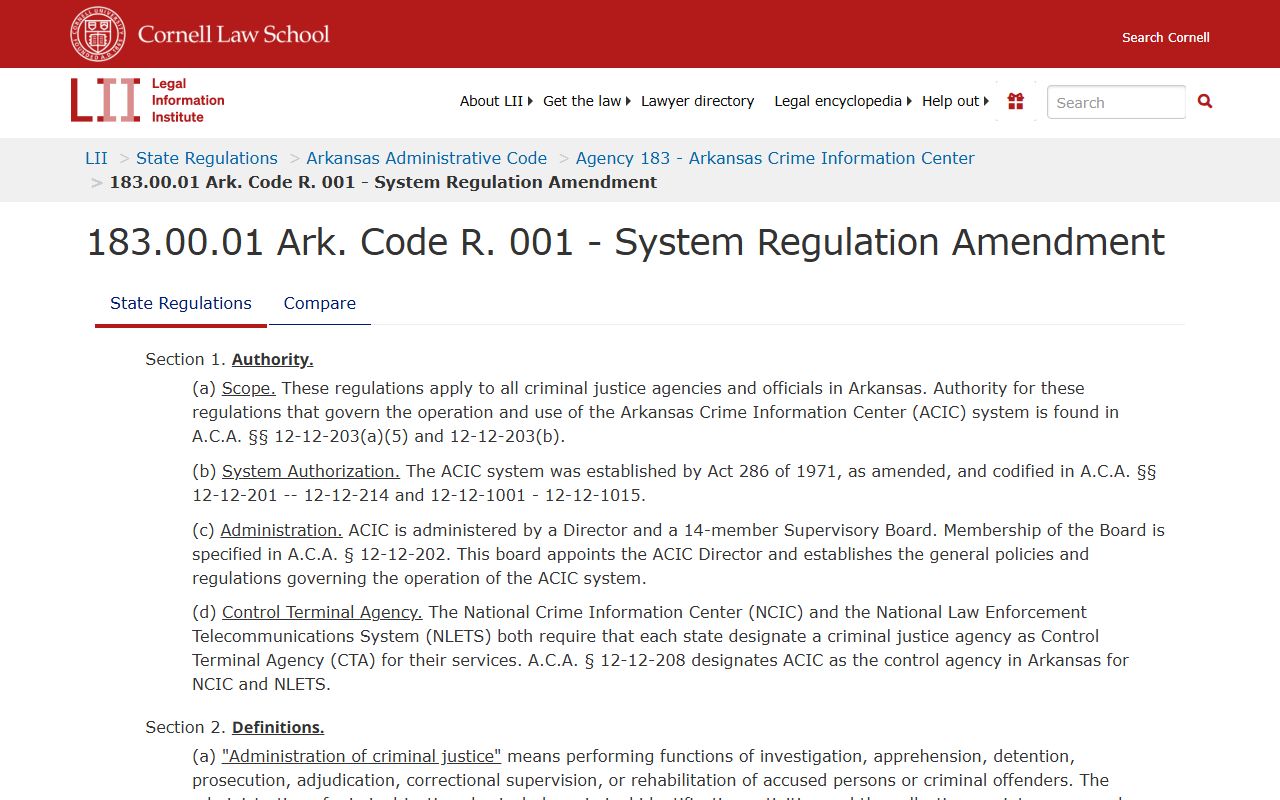
The ACIC regulations page hosted by Cornell's Legal Information Institute lists the full rule set. It covers fingerprint rules, disposition reports, and the right to challenge.
Arkansas FOIA and Police Blotter Access
The Arkansas Freedom of Information Act sets the rules for how any citizen can get a public record. The law lives at Arkansas Code § 25-19-101 through § 25-19-119. Agencies have 3 business days to respond to a written request. There is no need to give a reason. The statute reads, "Reasonable access to public records and reasonable comforts and facilities for the full exercise of the right to inspect and copy public records shall not be denied to any citizen."
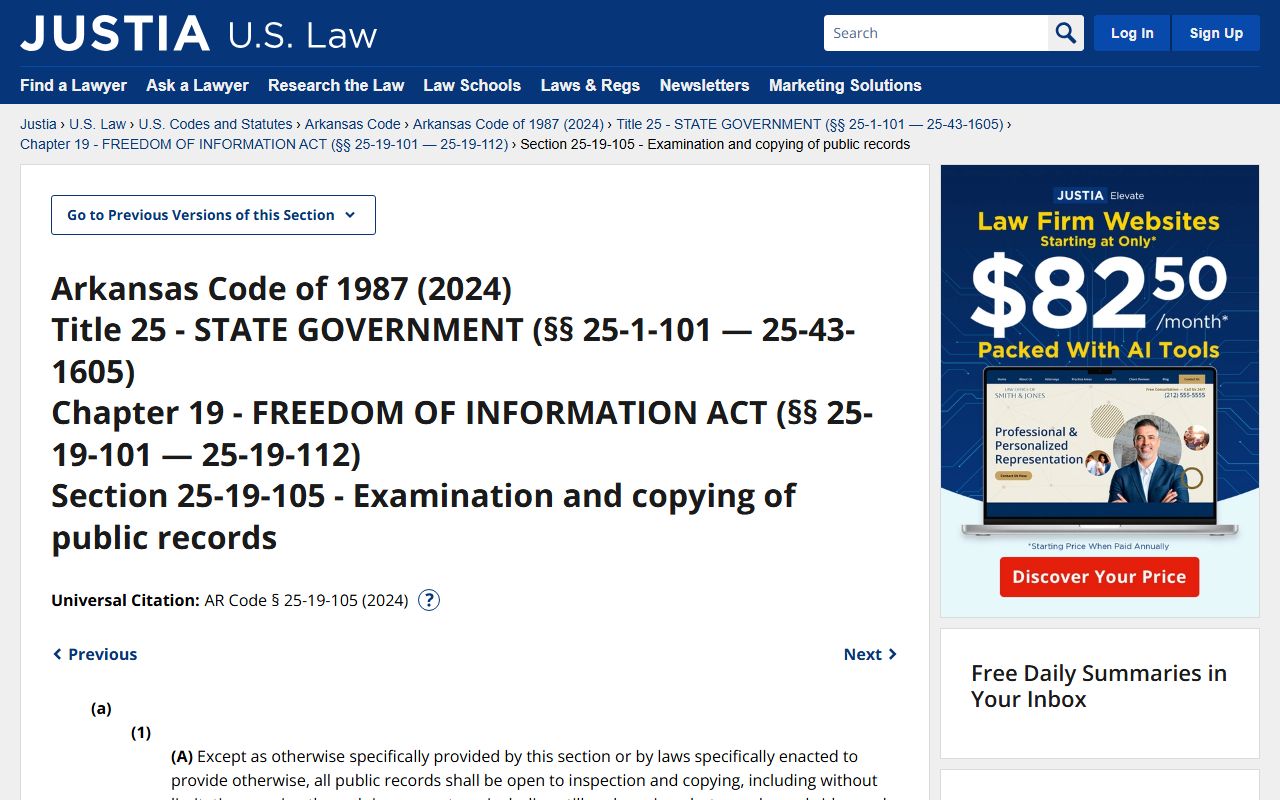
The FOIA page linked above shows the full text of Section 25-19-105. This is the rule that local police and sheriffs follow when you ask for a blotter report.
Note: Some items are exempt from Arkansas FOIA, such as medical records, adoption files, grand jury minutes, and active criminal investigations.
The Arkansas Attorney General can help if a local office gives you a hard time. You can call (800) 482-8982 to ask about your rights. If an agency says no, you can take the denial to a district or circuit court. A win at court can force the agency to hand over the file and pay your legal fees.
Fees are capped by law. Agencies can charge the real cost of copies. Staff time can be billed for long searches at prevailing wage rates. Certified copies cost more. Some agencies waive fees for journalists or for public interest work.
Requesting Arkansas Police Blotter Reports
You can send an Arkansas FOIA request to any police or sheriff's office in Arkansas. The request can be short. Put your name, your address, your phone, and the Arkansas police blotter record you want. Add the date of the event, the place, and any names you know. A report number helps the Arkansas records clerk find the file fast. Mail or email works. Some Arkansas offices take walk-ins.
Before you write the Arkansas records request, try the agency's website. Some Arkansas cities post a daily or weekly police blotter. Others publish an online Arkansas arrest log. You may find the Arkansas record you want with no paperwork at all. If the Arkansas police blotter is not online, send a FOIA note.
A good request includes:
- Your full name and contact info
- Date and place of the event
- Names of people in the case, if you know them
- A case or report number, if you have one
- The format you want, such as paper or PDF
Expect a reply within 3 work days. If the file is large, the Arkansas records clerk may ask for more time. You will get a cost quote before you pay. Most Arkansas police blotter reports cost only a few dollars. Old Arkansas arrest files and old incident reports may take longer to pull from storage. Certified copies of a police report or arrest record cost a small extra fee.
Arkansas Sex Offender and Inmate Records
The Arkansas Sex Offender Registry is run by ACIC. The public can look up Level 3 and Level 4 offenders on the site. Level 1 and Level 2 data is not posted. You can search by name, city, or ZIP code. The ASP background check tool also tells you if a person is on the registry at any level.
For inmates in state prison, use the Arkansas Department of Correction inmate search. You can search by ADC number, name, age, sex, or race. Results can be filtered by county, unit, or offense. The tool does not cover county jails. For county jail data, check each sheriff's office site or call the jail office.
The Arkansas Judiciary site ties it all together with a list of courts, rules, and forms. Use this site if you need to file a paper or read a state rule.
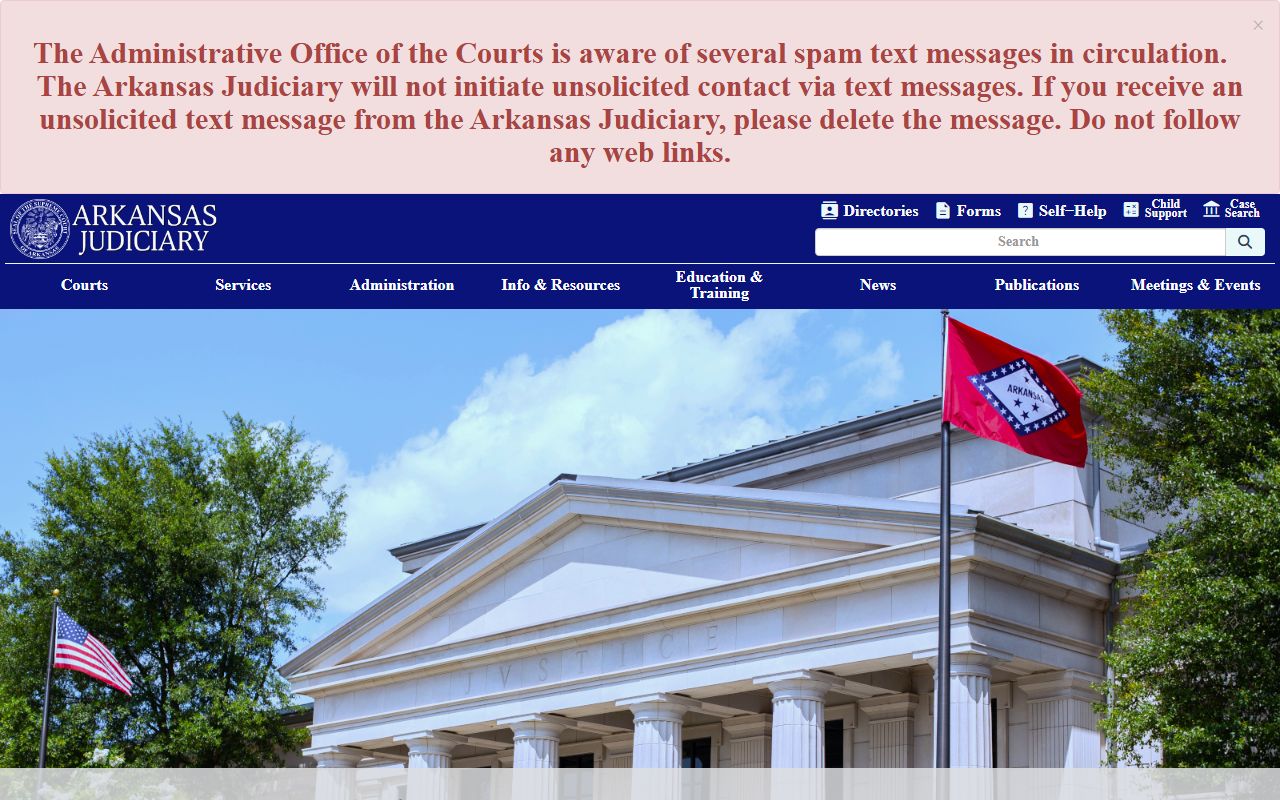
The Arkansas Supreme Court page lists all 28 judicial circuits and the district courts under them. It is a good first stop when you want to track a case from the blotter to the courtroom.
Arkansas Missing Persons
The state runs a public missing persons database called NeverForgotten.ar.gov. It launched in 2016 with the state attorney general. The site now captures missing person reports in real time, tied to ACIC data. You can search by name, date, county, or age.
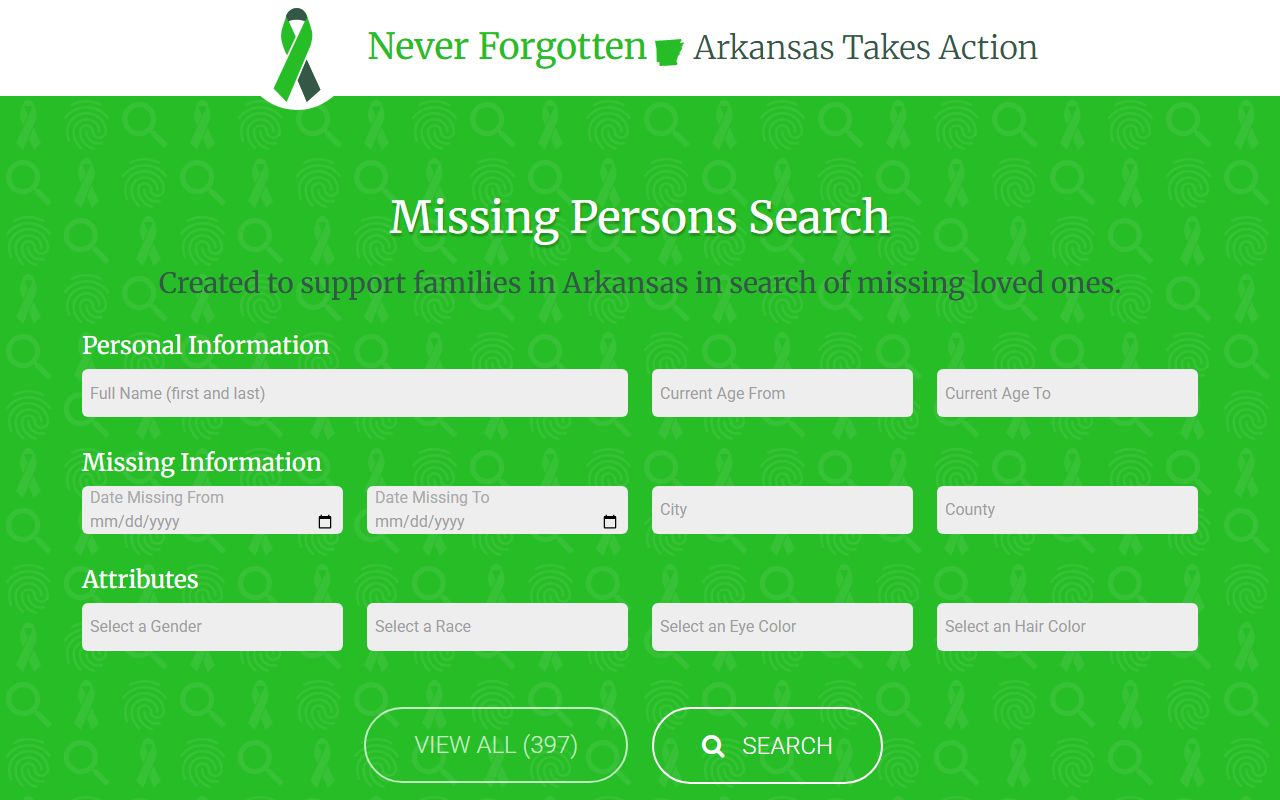
The NeverForgotten site is where families, friends, and the press can look for updates on open cases. It is a key tool for long-term cases that may not show up in the daily police blotter.
Arkansas Chiefs of Police Directory
The Arkansas Chiefs of Police Association lists contact info for police chiefs across Arkansas. The Arkansas list covers city police, university police, Alcoholic Beverage Control agents, and other Arkansas state unit heads. Use this Arkansas site when you need to reach a chief for a press check, a police blotter question, or an event.
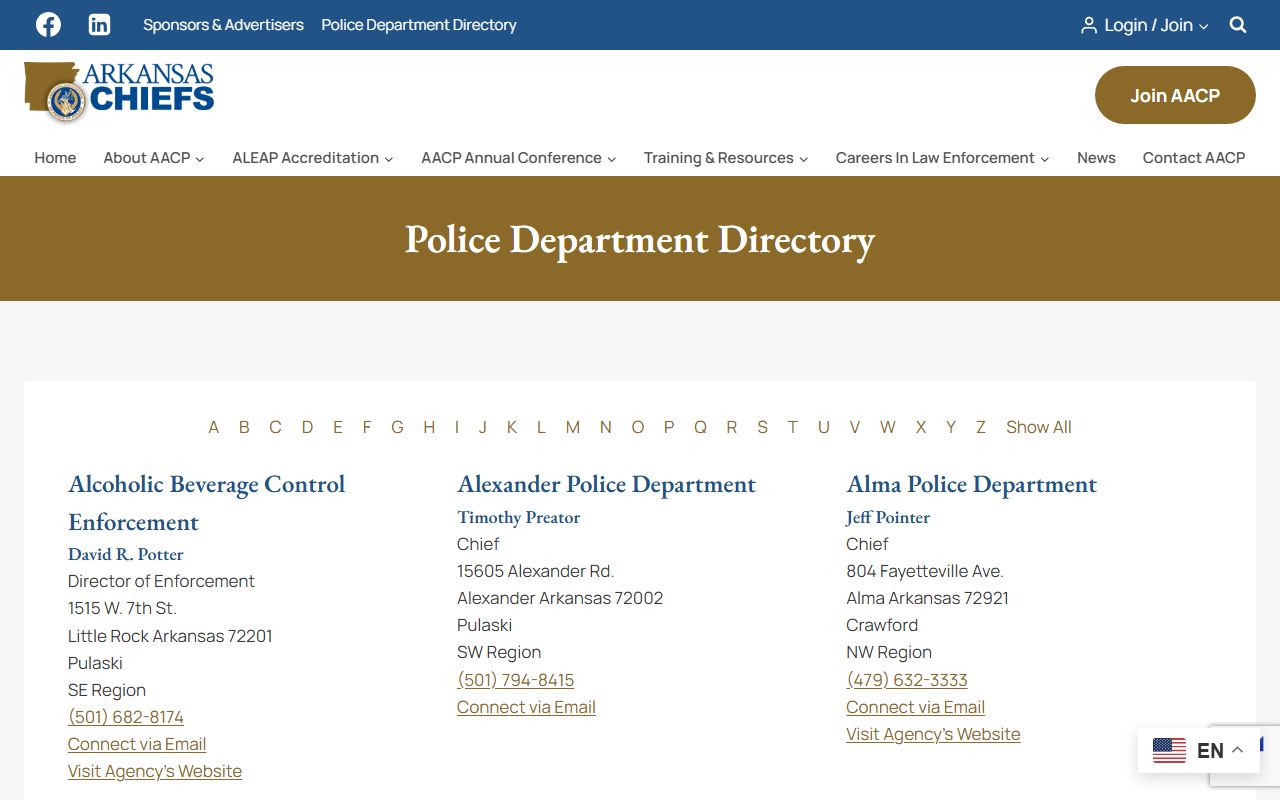
The Chiefs directory is a fast way to find a chief in any Arkansas city. It lists office phone and email for most members.
For forensic work tied to police blotter cases, the Arkansas State Crime Lab gives DNA, toxicology, firearms, and other tests for law enforcement. The lab sits at 3 Natural Resources Drive, Little Rock, Arkansas 72205. It is led by the Chief Medical Examiner. Reports from the Arkansas crime lab often show up in the incident report file and the court record later on.
Records Retention for Arkansas Police Blotter
Arkansas state law sets how long agencies must hold their police blotter records. Arkansas Code § 13-4-401 through § 13-4-404 sets the rules. Arkansas jail booking logs and dispatch reports must be kept for at least 5 years. Arkansas criminal case files vary by charge. Arkansas homicide records stay on file forever. Arkansas rape records stay a minimum of 15 years. Arkansas traffic accident reports stay on file for at least 3 years.
Local Arkansas police blotter data flows into the National Incident-Based Reporting System (NIBRS). Each month, Arkansas agencies send their data to ACIC, which forwards it to the FBI. NIBRS data is kept for good. It powers yearly Arkansas crime reports and public stats dashboards.
If you want an old Arkansas police blotter entry, call the local agency first. They can tell you if the file is still in the office or boxed off-site. Older Arkansas files may take a few work days to pull. Older still means a trip to state archives.
Browse Arkansas Police Blotter by County
Each of Arkansas's 75 counties has its own sheriff's office, jail, and police blotter records. Pick a county below to find local sheriff contact info, jail booking log links, warrant lists, and arrest record search tools.
Arkansas Police Blotter by Major City
Most large Arkansas cities run their own police department and publish or release a police blotter on request. Pick a city below for local police blotter links, incident report addresses, arrest records contacts, and phone numbers.